About La Pacha, Casa de Saberes
Who we are, and what our mission is
What is La Pacha?
La Pacha is an initiative dedicated to strengthening the capacities needed to sustain, regenerate, and pass on life.
It was born in response to an increasingly evident reality:
We live in a world full of information and technology, yet where many people have lost their connection to the fundamental processes that sustain existence.
We know how to use complex devices, but fewer people know how to grow their own food, care for water, build community, or understand the natural cycles on which all life depends.
We believe this situation is not only an environmental or educational challenge. It is also an opportunity to rethink the way we learn, live together, and build our future.
That is why La Pacha exists as a space where learning reconnects with experience, where knowledge serves life, and where people can develop the skills to live more consciously, resiliently, and cooperatively.
Where we are
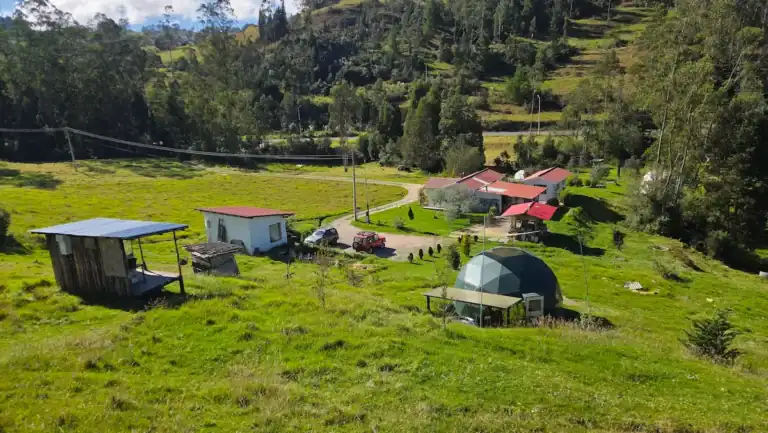
La Pacha casa de saberes sits on about 2 hectares of mountainous farmland in Tarqui, about 30 minutes from Cuenca, Ecuador.
The space has accommodation, a dining room and open air living room overlooking the land, kitchens, toilets, a ceremony space and temazcal, and running water. There is a lot of open land to work with here, where we are developing our gardens and ecoprojects.
The space is also shared with horses, dogs, cats, sheep, and a goat.
Our inspiration
The word “Pacha” refers to a profound understanding of reality in which life, territory, time, and community are all woven together.
We are inspired by the wisdom of ancestral peoples, not as an attempt to return to the past, but as a source of teachings that can address contemporary challenges. We believe that humanity is in a constant process of evolution.
Therefore, our approach neither seeks to copy ancient models nor reject current progress. We aim to integrate the best of both worlds to build new possibilities.
We recognize the value of science, innovation, technology, and research, as well as the importance of traditional knowledge related to agriculture, construction, natural medicine, community organization, and a respectful relationship with the elements that sustain life.
Our approach is intercultural, open, and committed to continuous learning: We learn from nature. We learn from communities. We learn from experience. We learn from all cultures that contribute to the well-being of life.
Our vision of Buen Vivir
La Pacha is based on a contemporary reinterpretation of Buen Vivir (Good Living).
We understand that well-being depends not only on material conditions, but also on the quality of our relationships, including:
- our relationship with ourselves;
- our relationship with others;
- our relationship with the land;
- and our relationship with life.
For us, Buen Vivir does not mean going backward or rejecting development. It means recognizing that material resources are tools at the service of life, not the ultimate goal of existence.
We believe that a truly developed society is one that allows people to have time, health, community, creativity, learning, and the opportunity to fully develop their human potential.
Our mission and vision
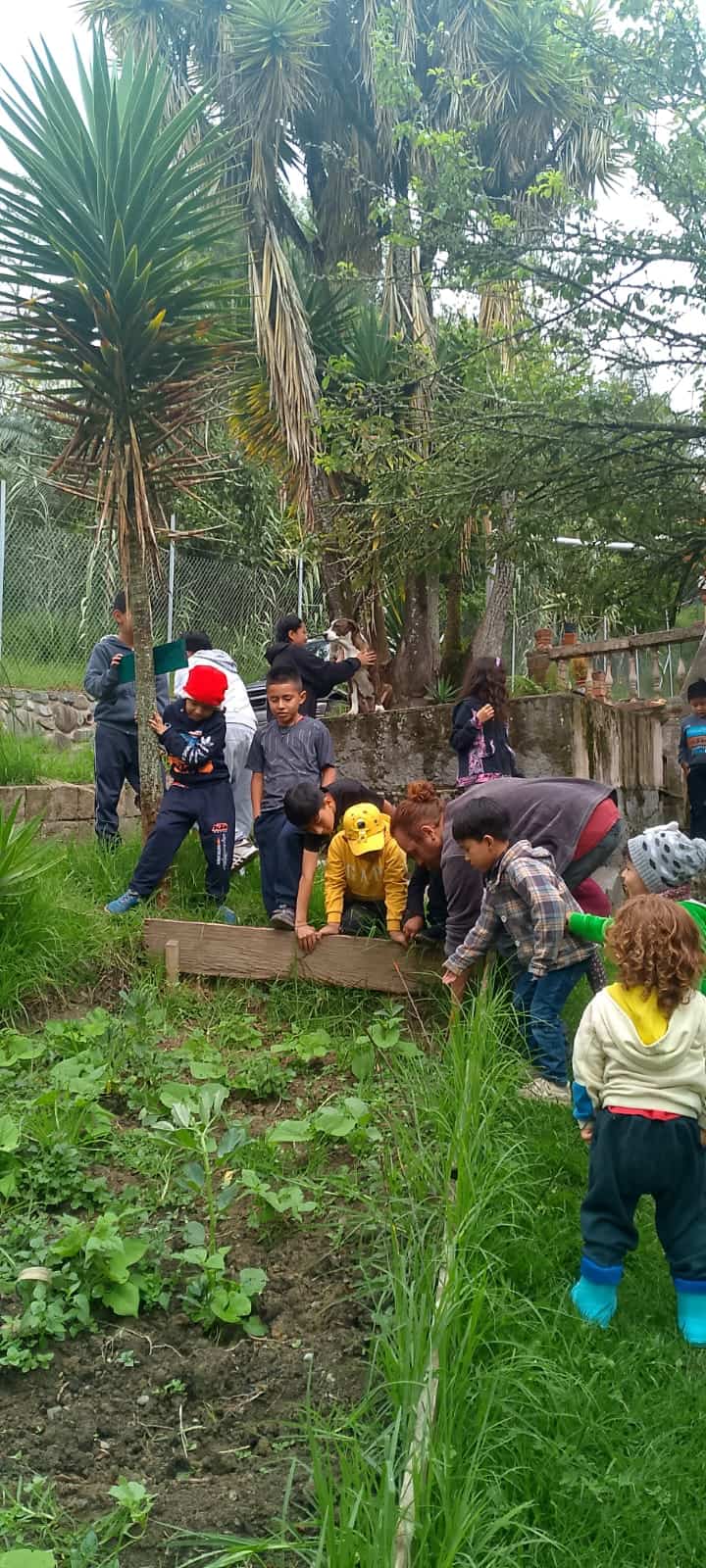
Our principles: To strengthen the human, community, and territorial capacities necessary to sustain, regenerate, and transmit life through experiential education, ecological regeneration, applied research, and community learning.
To contribute to building a culture oriented toward Buen Vivir (Living Well), where individuals, communities, and territories develop greater autonomy, resilience, cooperation, and well-being, guaranteeing better conditions for future generations.
Our principles
- Life at the center: Every decision should strengthen the capacity of living systems to sustain and generate life.
- Learning by doing: Experience is one of the deepest forms of learning.
- Regenerate rather than extract: We seek to improve the conditions of the territories and communities we work with.
- Community and cooperation: We recognize that great challenges call for collective responses.
- Diversity and dialogue: We value the richness of different cultures, forms of knowledge, and ways of understanding the world.
- Future generations: We act with consideration for the impact our decisions will have on those who will inherit the world we are building today.
The question that guides our work
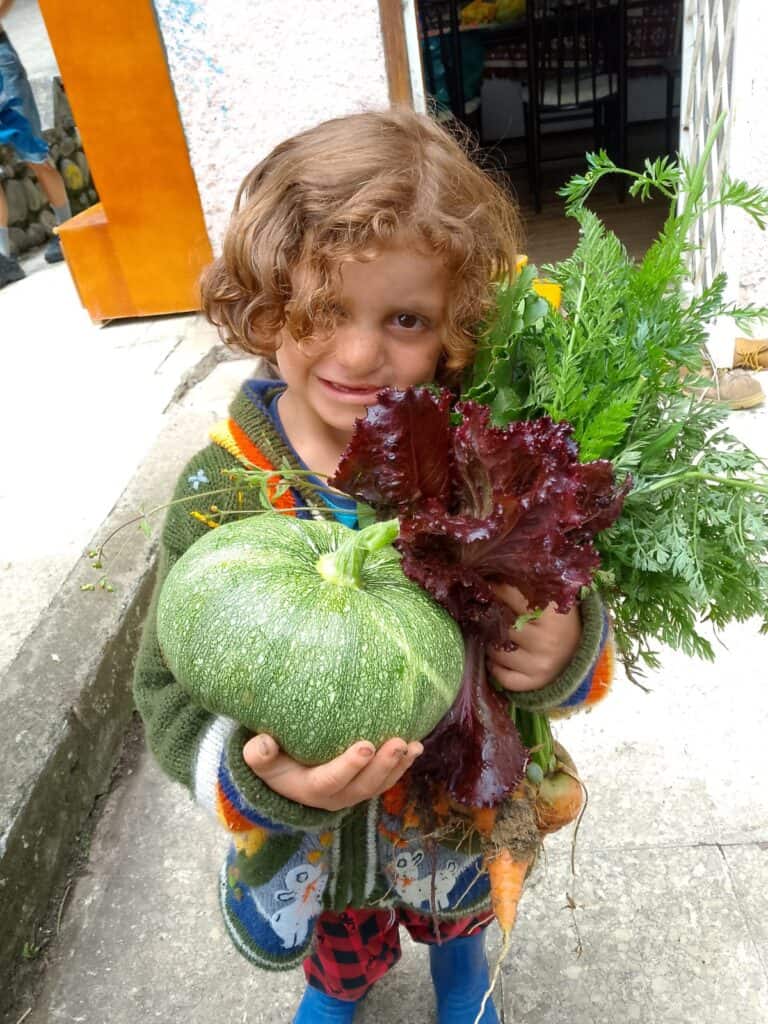
Throughout La Pacha’s development, we have found that one question can guide all our actions: What legacy do we want to leave for future generations?
This question runs through our educational programs, our territorial regeneration projects, our alliances, and our long-term vision.
We believe that each generation inherits a legacy built by those who came before.
And we believe that each generation has the responsibility to improve that legacy before passing it on to those who come after.
That is why we work so that future generations will find:
More biodiversity.
More clean water.
More living knowledge.
More community.
More opportunities to learn.
More capacity to sustain life.
Toward the Ecovillage
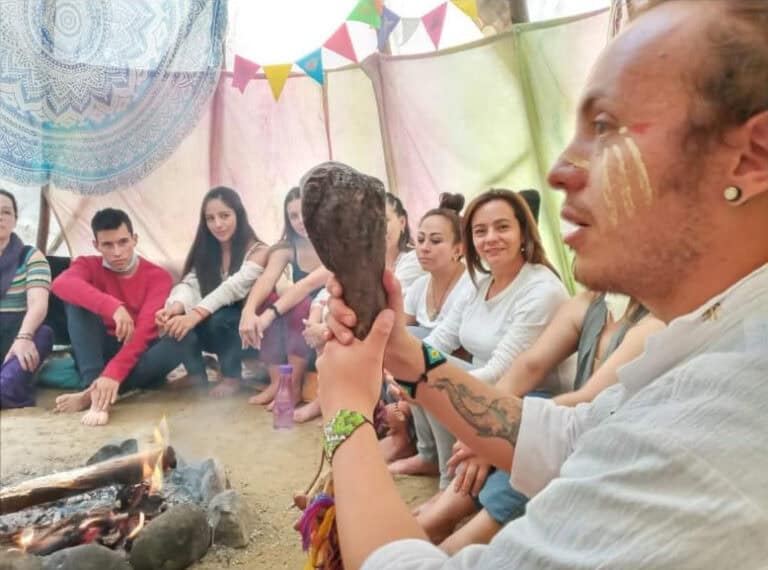
La Pacha’s long-term vision is the creation of an Ecoaldea Escuela (Eco-village School): a living territory where education, regeneration, research, sustainable production, and community are all part of a single experience.
A place where children, young people, families, volunteers, researchers, and facilitators can learn directly through practice.
A space capable of inspiring new ways of relating between people and the Earth.
More than a project, we aspire to build a legacy.
More than infrastructure, we aspire to sow a culture.
More than an organization, we aspire to contribute to a movement of people committed to building a future where life can flourish in all its forms.
“La Pacha is a space where we return to the origin to remember that we are part of life, and that our deepest purpose is to learn to care for it, regenerate it, and share it.”
Get involved
Want to get involved in our organization? here are some ways you can help: